
Most urinary tract infections begin when bacteria, usually Escherichia coli, travel into the bladder and attach to the lining of the urinary tract. Once attached, they multiply and produce the familiar burning sensation, urgency and irritation that many women know well. D-mannose is thought to interrupt this process, which is why researchers and clinicians have spent time examining whether this ordinary sugar can reduce the frequency and severity of urinary tract infections.
The supplement is widely available, often described as D-mannose sugar tablets. It has also been the subject of a Cochrane systematic review looking at its use for preventing and treating urinary tract infections in adults and children. The fact that such a simple sugar has generated this level of research attention reflects just how common urinary health problems are, and how keen many women are to find options beyond conventional treatment.

What is D-mannose?
D-mannose is a simple sugar found in many fruits. It is related to glucose, and it also occurs naturally in some cells in the human body. People may see this ingredient listed under other names, including Carubinose, D-manosa, Mannose and Seminose, so it helps to read product labels carefully.
The sugar can be derived from mannitol, which is itself produced from fructose, starch or sucrose found in certain fruits, vegetables, plants and trees, as well as some marine plants such as kelp. Because it comes from natural sources, D-mannose is often presented as a gentle option for people who want to support their urinary health without relying solely on pharmaceutical products.
In practical terms, D-mannose is used to treat urinary tract infections and is described as a natural sugar that some people take when symptoms appear. It should not be confused with the artificial sweeteners or table sugars used in everyday cooking, even though it shares a similar chemical family with glucose.
D-mannose, glucose and microorganisms in urine
Glucose and D-mannose are both simple sugars with comparable structures, but they behave differently in the body. Glucose is known mainly as an energy source, and small amounts of glucose are physiologically detectable in urine even in healthy people. D-mannose, by contrast, attracts attention because of what it may do inside the urinary tract rather than because of any nutritional role.
The presence of glucose in urine is a useful point of reference for researchers. Since small glucose amounts are physiologically detectable in urine, scientists have been careful to examine whether D-mannose simply adds to the sugar pool in the bladder. The evidence points to a different role, one that involves the surface of the bladder wall and the way microorganisms attach to it.
When D-mannose is excreted in urine, it potentially inhibits Escherichia coli, the main causative organism of urinary tract infections, from attaching to the urothelium. The urothelium is the lining of the bladder, and preventing bacteria from binding there is an important step in stopping an infection from becoming established.
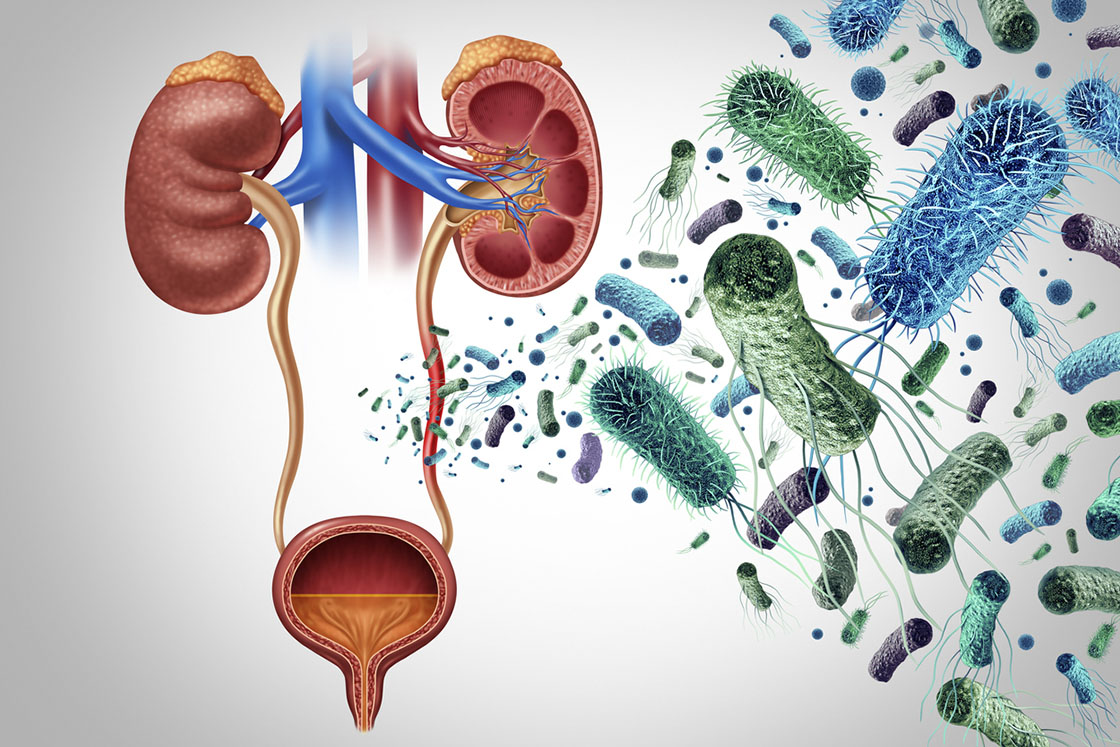
How D-mannose can help clear bacteria from the bladder
The most widely accepted explanation is that D-mannose acts as a decoy. The lining of the bladder wall contains mannose-like structures that certain bacteria recognise and cling to. D-mannose molecules in the urine are similar in structure to those cells on the bladder wall, so they can act as competitors for the bacteria’s attention.
Scientists think that the bacteria stick to the D-mannose sugar instead of attaching to the bladder. Once bound to the sugar, the microorganisms can be expelled from the body through urine. This helps the bacteria leave the body and so prevents the growth of bacteria within the urinary tract. In effect, the bladder is spared because the passing sugar carries the threat away.

What does the research say about D-mannose?
A number of studies have tested whether D-mannose works in practice as well as in theory. One line of research found that D-mannose and D-glucose can significantly reduce bacteriuria within one day, and that the effectiveness of both sugars depends on the concentration used. Bacteriuria means the presence of bacteria in the urine, so a reduction in bacteriuria indicates that the urinary tract is being cleared of microorganisms.
Other work has examined the bacteria themselves. In laboratory studies, bacteria treated with D-mannose showed no difference in bacterial morphology or motility when compared with untreated bacterial cells. This suggests that D-mannose does not damage the bacteria or change how they move. Instead, its role is more subtle and centres on preventing the bacteria from anchoring to the bladder wall.
Clinical evidence, however, is mixed. D-mannose has been reviewed for the prevention and treatment of recurrent urinary tract infections in women, with randomised controlled trials producing varying results. Guidance from NICE acknowledges this uncertainty, and the Cochrane review of D-mannose sugar tablets for urinary tract infections in adults and children also highlights the need for more robust research.
A 2025 review of D-mannose for preventing recurrent urinary tract infections noted that bacteria treated with D-mannose showed no difference in morphology or motility compared with untreated cells. This reinforces the view that any benefit from D-mannose comes from blocking attachment to the bladder wall rather than from direct antibacterial action.
Using D-mannose for urinary health
For women who experience recurrent urinary tract infections, D-mannose is often seen as a first-line natural option. The general advice is to consider D-mannose only at the very beginning of symptoms, when the first signs of irritation, urgency or discomfort appear. At this early stage, the sugar may be able to clear bacteria before they multiply and cause a full infection.
Timing is important, and so is knowing when to seek help. If symptoms have not diminished or completely disappeared after a short period, it is wise not to wait any longer before seeing a doctor. There is a real risk that bacteria are growing at a faster rate than D-mannose can clear them, especially if the bacteria are resistant to this approach.
The research base also has limits. There is insufficient research at present to say with certainty which women will benefit most or exactly how D-mannose compares with antibiotics in every situation. For this reason, D-mannose is best understood as one tool within a broader plan for urinary health, not as a guaranteed cure or a substitute for professional advice.
- Take D-mannose early, at the first sign of urinary discomfort.
- Monitor symptoms closely over the following day.
- See a doctor promptly if symptoms do not improve.
- Remember that D-mannose appears to prevent attachment rather than kill bacteria.
- Use it alongside other healthy habits that support the urinary tract.
D-mannose offers a fascinating example of how a natural sugar can interact with glucose, microorganisms and urine in a way that supports the body’s own defences. For women who struggle with urinary discomfort, it may provide a gentle early response when symptoms first appear. The key is to use it early, keep an eye on symptoms and never delay seeking medical care if an infection seems to be taking hold.

Does D-mannose flush bacteria out of the body?
Yes, that is the main way it is thought to work. D-mannose in the urine acts as a decoy for Escherichia coli, the main cause of urinary tract infections. The bacteria attach to the sugar instead of the bladder wall and are then carried out of the body during urination. This helps prevent the bacteria from multiplying and causing an infection.
Is D-mannose the same as glucose?
No, although the two are related. D-mannose is a simple sugar found in many fruits, and it also occurs naturally in some cells in the human body. Glucose is a separate simple sugar, and small amounts of glucose are physiologically detectable in urine. D-mannose is of interest because of its behaviour in the urinary tract, not because of its role as an energy source.
Can D-mannose reduce bacteria in urine quickly?
Research indicates that D-mannose and D-glucose can significantly reduce bacteriuria, the presence of bacteria in the urine, within one day. The effect appears to depend on the concentration of the sugar. However, D-mannose should only be used at the beginning of symptoms, and anyone whose symptoms do not improve quickly should see a doctor without delay.
Can D-mannose replace antibiotics for urinary tract infections?
At this stage, the evidence is mixed. Randomised controlled trials of D-mannose for recurrent urinary tract infections in women have produced varying results, and NICE guidance notes the uncertainty around its use. There is also a risk that bacteria may grow faster than D-mannose can clear them, particularly if the bacteria are resistant. D-mannose should not replace professional medical care.